Revisiting Studio Ghibli #2- Laputa: Castle in the Sky
Laputa: Castle in the Sky (1986)
Revisiting Studio Ghibli #2
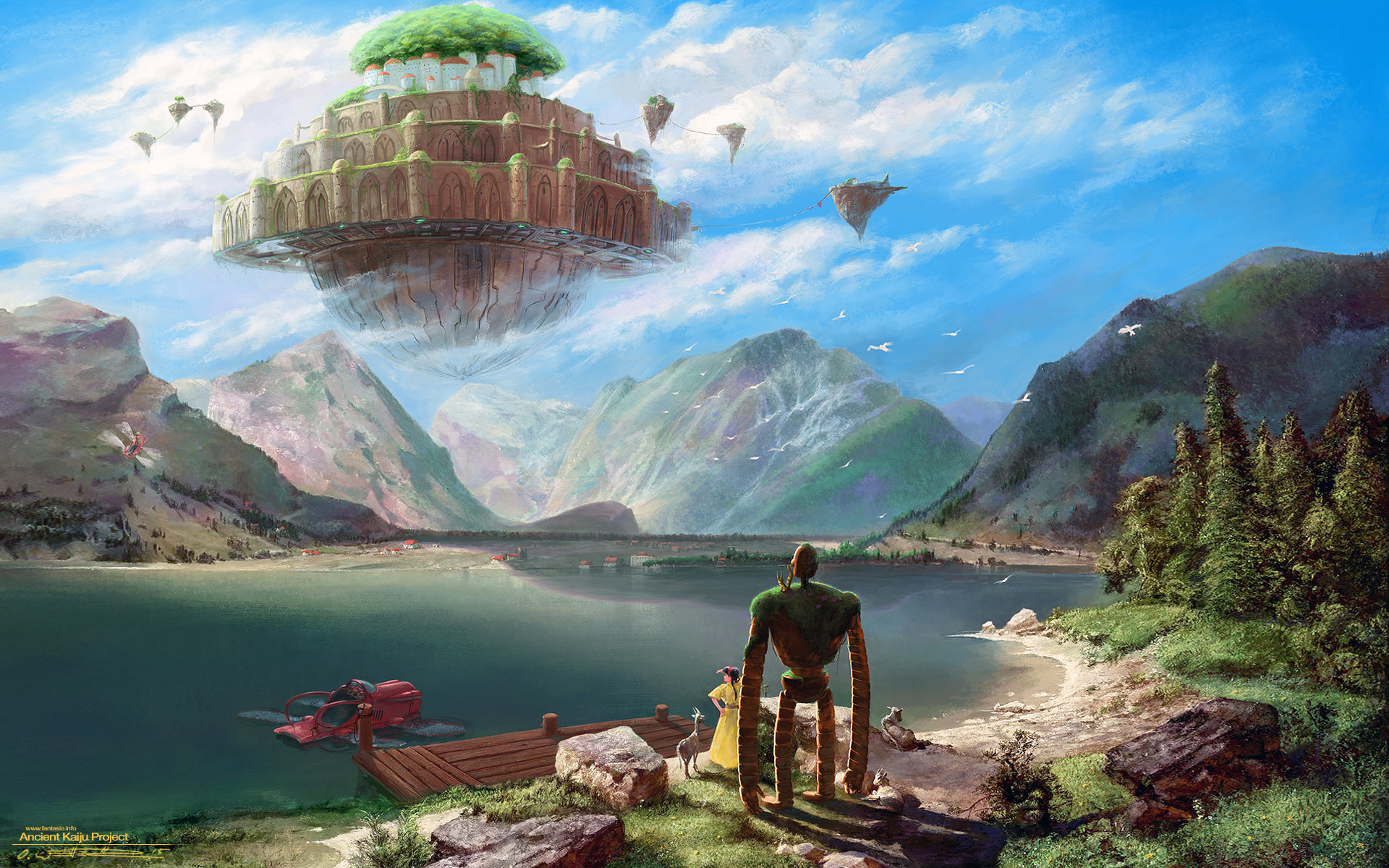
Laputa: Castle in the Sky is often labelled Studio Ghibli’s first film. That description undersells its importance. More than a debut, Laputa feels like the moment Ghibli becomes a shared language for audiences. It is where the studio’s ideas, tone, and emotional priorities come together in a way that invites long-term attachment. For many viewers, this is where the Ghibli fandom truly begins.
Released in 1986, Laputa arrives with ambition and clarity. It does not explain itself away or chase trends. Instead, it offers a complete world and trusts the audience to grow into it. That confidence would become one of Studio Ghibli’s defining traits.
The First Ghibli Adventure That Feels Like Ghibli
Nausicaä of the Valley of the Wind laid the groundwork, but Laputa is where the studio’s identity feels locked in. The mix of high adventure and quiet reflection is already present. Action sequences exist alongside long pauses, wide skies, and moments of stillness.
This balance is key to why Laputa resonates. It understands that spectacle means little without emotional grounding. The film moves quickly, but it never feels rushed. Each set piece serves character and theme rather than momentum alone.
Flight as Freedom and Fear
Flight defines Laputa. From Sheeta’s slow fall through the clouds to the sweeping airship chases, the film treats the sky as both escape and threat. Flying machines inspire awe, but they also place characters at constant risk.
Miyazaki uses flight as shorthand for freedom tempered by consequence. Technology can lift people above the world, but it can also remove them from it. This idea becomes a recurring motif across Ghibli’s later films, from Porco Rosso to The Wind Rises.
Heroes Built on Kindness

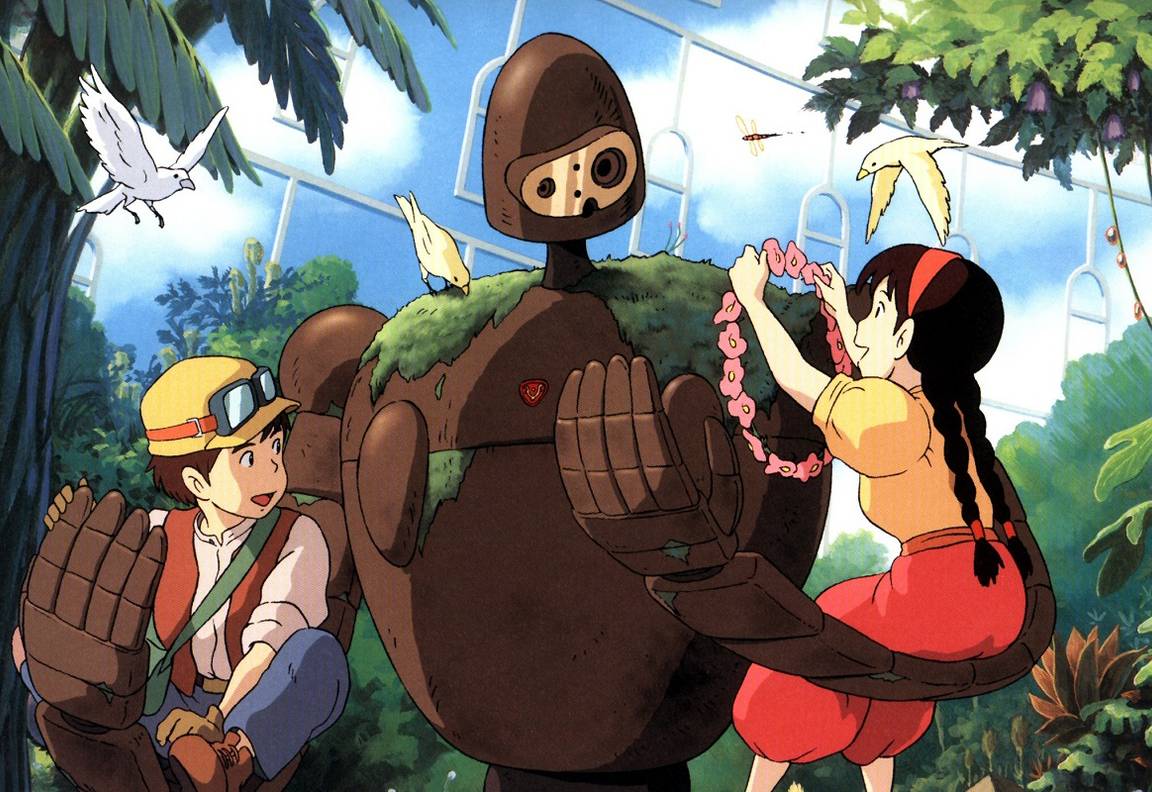
Sheeta and Pazu establish the Ghibli hero template early. They are young, capable, and emotionally open. They act because it feels right, not because they seek reward or recognition.
Their goodness is never treated as weakness. Instead, it exposes the moral emptiness of those in power. Muska, calm and controlled, represents authority stripped of empathy. His threat lies not in rage, but in certainty. Laputa makes a clear statement: power without care leads to ruin.
A Studio-Wide View on Technology
Laputa refuses simple answers about progress. The robot guardians are gentle until disturbed. Their violence feels programmed rather than personal. This distinction matters.
Miyazaki presents technology as a mirror. It reflects the intent of those who use it. Laputa itself is beautiful, advanced, and completely abandoned. It functions without people, and that is the problem. The film argues that innovation without humanity becomes hollow.
The Beauty of What Is Left Behind
The floating city is not triumphant. It is quiet, overgrown, and distant. Nature has reclaimed it without conflict.
This image becomes central to Ghibli’s worldview. Ruins are not failures to be fixed. They are reminders that dominance fades and life continues. Laputa treats the past with respect rather than nostalgia, a tone that later defines films like Princess Mononoke and Spirited Away.
Where the Ghibli Fandom Begins
Laputa feels like the first film designed to be returned to. Its world invites exploration beyond the plot. Its ideas reward repeat viewing. This is where many viewers begin to recognise what makes a Ghibli film distinct.
The sense of wonder, the moral clarity without cynicism, and the refusal to talk down to its audience all help create loyalty. Laputa does not demand fandom. It earns it.
 Legacy
Laputa: Castle in the Sky is not flawless. Its exposition is direct and its pacing uneven in places. Yet these qualities give it sincerity. It feels like a studio discovering how to speak to the world.
In that sense, Laputa is more than a starting point. It is the film where Studio Ghibli finds its voice and invites audiences to listen. Everything that follows builds on this foundation.

Comments
Post a Comment